


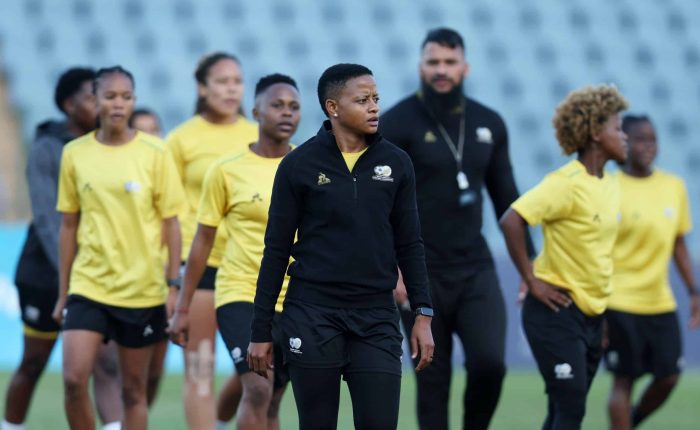
The 2026 Women’s Africa Cup of Nations will finally be played in Morocco as Banyana Banyana look to regain the trophy and book a place at the Women’s World Cup, writes Nick Said.
The 2026 Women’s Africa Cup of Nations will finally be played from 26 July to 16 August when a record 16 teams converge in Morocco for continental glory and a place at the 2027 Women’s World Cup in Brazil.
The tournament was originally scheduled for March and April this year, but was postponed by the hosts in the wake of the men’s tournament which concluded in January and appeared to drain the nation’s energy for another continental finals.
There had been talk that South Africa was ready to step in and take over hosting duties earlier in the year, but that would have meant Morocco’s disqualification and, as such, no place at next year’s World Cup.
So instead, Morocco and the Confederation of African Football reached a compromise that allowed them to retain hosting rights wile shifting the tournament to later in the year, despite the fact that many teams were already in camp and had chosen their squads.
Morocco’s financial muscle, and the fact that it routinely assists other African nations with venues for matches when they cannot play at home, as well as CAF with hosting events no one else wants, gives them plenty of boardroom clout.
It is a case of better late than never, and the fact the tournament will now be played in the summer months is a bonus.
Anyone who endured the winter men’s AFCON will attest to how unpleasant conditions can be.
THE GROUPS
A record 16 teams will take part in the finals, with the draw long completed and the groups set. The teams have been placed into four pools of four, with the top two in each group advancing to the quarter-finals.
Morocco headline Group A as the host nation and are joined by bitter rivals Algeria, Senegal and Kenya.
The game against Senegal will no doubt have some added spice. Kenya are inexperienced at this level, having appeared only once before in 2016, when they lost all three games, conceding 10 goals in the process.
Banyana Banyana have, on the face of it, a kind draw with Ivory Coast, Burkina Faso and Tanzania in Group B.
Ivory Coast are making their third WAFCON appearance, but their first since 2014, when they finished with the bronze medal, dashing South Africa’s hopes of qualifying for the 2015 Women’s World Cup.
Burkina Faso debuted in 2022 and managed a single point from their three games, going out in the pool stages.
Tanzania have appeared twice before, in 2010 and the 2024 edition, managing a draw and two defeats on each occasion.
Defending champions Nigeria are in the ‘Group of Death’ along with Zambia, Egypt and Malawi. Nigeria will still fancy their chances of advancing with their star quality, but who will join them from Group C is open to question.
Zambia’s greater experience, having played at the last two Olympic Games and the 2023 Women’s World Cup, suggests it will be them, especially with star forward Barbra Banda in their side.
Egypt might not have the explosiveness of other teams in the pool but are workmanlike and organised, while Malawi may be on debut but have shown great improvement in recent years and have the deadly Chawinga sisters, who play at the highest level abroad. Group D is tough to call, with Ghana, who beat Banyana to finish third in the previous edition, up against Cameroon, Mali and Cape Verde.
You would think Ghana are overwhelming favourites to win the pool, and they should do so, but none of their opponents will be easy.
Cameroon are three-time runners-up but, surprisingly, did not qualify for the 2024 edition, the first time they had missed out.
Mali reached the quarter-finals in the 2024 edition, with their best finish being fourth in 2018. Cape Verde are on debut and will be something of an unknown quantity for the other teams in the pool.
WOMEN’S WORLD CUP QUALIFICATION
The four semi-finalists will automatically qualify for the 2027 Women’s World Cup in Brazil, which is a major carrot for the teams.
But it is not the end of the road for the losing quarter-finalists. They will play an additional play-off round at this competition to determine two teams that will advance to the intercontinental preliminary stage.
Those play-offs will be staged in February 2027 and feature 10 teams drawn from all six of FIFA’s confederations, with one each from Oceania and Europe.
The intercontinental qualifiers are played in a knockout format with semi-finals and a final, and three teams advance to the World Cup finals.