

This month sees the culmination of yet another African Champions League campaign, writes Mark Gleeson.
It is now more than three decades since South Africa began to compete in the various African club competitions, but despite a superior professional structure and much better facilities than most of the other countries, Premier Soccer League clubs have not exactly set African football alight.
Since 1993, when South African sides first entered the African Champions Cup, African Cup Winners’ Cup, and the Confederation of African Football (CAF) Cup, only three clubs have won a trophy.
Orlando Pirates took the Champions Cup in 1995, on the eve of the country’s success in the African Nations Cup, and in 2001, their arch-rivals, Kaizer Chiefs, got their hands on the African Cup Winners’ Cup.
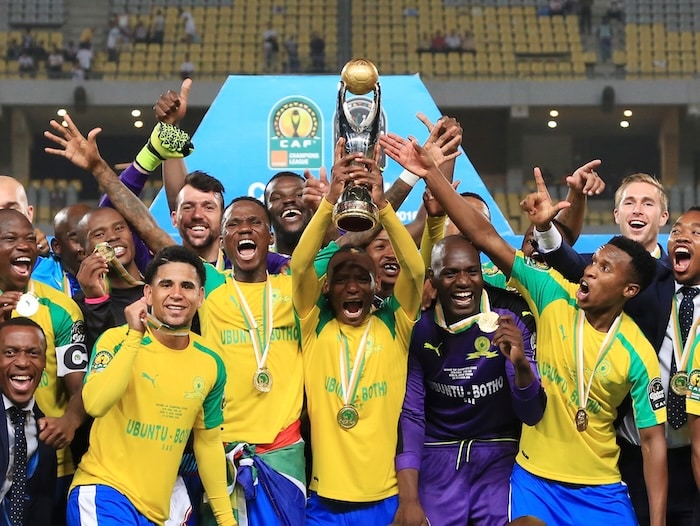
Since then, Mamelodi Sundowns have become the country’s best performer in CAF competitions but have only one Champions League trophy success in 2016 to show for it.
They can boast some remarkable consistency in the group campaigns after this season, setting the record, along with Al Ahly of Egypt, of 11th successive appearances in the group competition.
What makes Sundowns’ achievement even better is that in nine of the 10 previous group competitions, they have made it past the group phase and into the last eight.
But they have often not been able to reach the final, failing to do so in eight of the past ten, when they won in 2016 and then again last season when they lost to the Pyramids of Egypt over two legs.
Too often, Sundowns have been the top-form team in the group phase only to be bundled out in the knockout stage.
It took 23 years between Pirates’ victory in the continent’s premier competition until the Sundowns matched the feat and were also able to put a star on their jersey as African champions.
That must have been seen as something of a failure for the South African professional game.
Winning a continental club title is the highest honour for any South African club, although they have not always seen it that way.
For decades, sides from the country have attached little importance to gaining success in Africa.
Some teams have not even entered the events they have qualified for, concerned over costs and financial setbacks.
It was a shortsighted policy that even big-name clubs like Chiefs have been guilty of.
But that has changed rapidly with the much improved rewards.
Not only has the prize money for the continental club competitions been dramatically hiked, the Champions League is the only route to the vastly more lucrative Club World Cup.
When Sundowns won the Champions League in 2016, they took home a purse of US $1.5 million, which in those days was worth just over R20 million – by far the single biggest sum any South African club has ever earned from a single competition, double what the PSL league champions earned the same season.
This season’s Champions League winner will get $6 million in a substantial rise over the last decade.
The winners of the Champions League for 2025 (Pyramids of Egypt), 2026, 2027, and 2028 will qualify for the Club World Cup in 2029.
It will be the second edition of FIFA president Gianni Infantino’s pet project.
Sundowns played in the first Club World Cup, in the U.S last year, and amassed four points in their three group games, earning US $3 million on top of the US $9.55 million (approx. R162 million) they got just for participating in the new-look 32-team tournament.
World football’s governing body threw money at the event in an effort to win over sceptical European clubs with a total prize money pot of $1 billion, with $525 million dished out to teams just for competing and another $475 million given out based on how they got on during the tournament.
There is expected to be even more money for the next edition, the kind of riches that almost all African clubs previously could only dream of. Pirates lost $600 000 or around R10.4 million when they were eliminated from the Champions League before the group stage in a hefty blow to the club’s finances.
But even then they did receive $100 000 for participating.
This is only the second year that clubs eliminated from African club competition before the group phase receive money.
It has been increased 100% from $50 000 last season but is still markedly less than the lucrative spoils for the 16 clubs who advance to the group phase.
Competing in the rigours of continental club competition – and in Africa it is really rigorous given the travel, poor conditions and hostile reception – builds players’ mental strength and character.
They all become better footballers after journeys to hostile confines in places like Cameroon or Congo.
CHAMPIONS LEAGUE HISTORY
Starting life as the African Champions Cup in 1964, the first team to lift the trophy was the Cameroonian side Oryx Douala, who beat Stade Malien of Mali 2–1 in a one-off final. There was no tournament held the following year, but the action resumed in 1966, when the two-legged ‘home and away’ final was introduced, which saw another Malian team, Real Bamako, take on Stade Abidjan of the Ivory Coast. Bamako won the home leg 3–1, but it all came apart for them in the away game in Abidjan as the Ivorians went on to win 4–1 to take the title 5–4 on aggregate. Egyptian clubs have the highest number of victories (19 titles), followed by Morocco with seven. Egypt also has the largest number of winning teams, with four clubs having won the title. The competition has been won by 26 clubs, 12 of which have won it more than once. Al Ahly is the most successful club in the competition’s history, having won it a record 12 times.