


Morocco will be favourites to lift the Africa Cup of Nations on home soil, but here are other challengers too, writes Mark Gleeson.
It will not be for the first time in recent editions that Morocco are the hot favourites for success at the Africa Cup of Nations finals but the continental championship is a tournament where the form book is often way off the mark.
Morocco’s status as the team tipped to win is enhanced by the fact they are hosting the 24-team extravaganza plus are the top ranked team on the continent and have gone through their last two qualifying campaigns unbeaten.
Indeed, they have not lost a competitive fixture since South Africa knocked them out of the last tournament in the Ivory Coast, where their favourites tag came on the back of them becoming the first African side to get all the way to the World Cup semi-finals.
But the reality of the Cup of Nations field is that there are any number of legitimate challengers and it will be the form over the month that counts, not previous results, quality of players in the squad or coaching expertise.
Other North African sides will be hoping that the familiar conditions give them an advantage.
Algeria and Egypt have strong sides, while the usual coterie of west African challengers – including holders Ivory Coast, Ghana, Nigeria and Senegal – also in with a chance.
Cameroon are never to be discounted although bumbled through the recent World Cup qualifiers with their coach and federation bizarrely at logger heads.
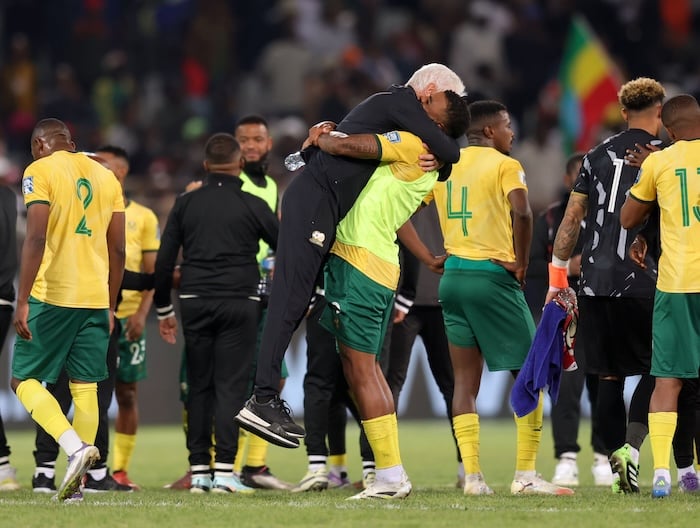
South Africa will be looking for the title too and in the last edition made a surprisingly spirited bid, ended in the semi-finals by Nigeria who edged them on post-match penalties.
It is a young side who are again likely to be a little under the radar and therefore able to get on with things without too much pressure or expectation.
In contrast, there is huge pressure on Morocco and coach Walid Regragui to deliver the country’s first trophy since 1976.
It is also a logical expectation for a team ranked 12th in the FIFA rankings but in recent months, some local critics have questioned Regragui’s playing style, deeming it too defensive to be able to compete for victory at the Cup of Nations.
“I accept criticism, as long as it’s coherent, because it’s part of the job,” the coach replied.
“What bothers me is when people look for small details, like the style of play, for example. Our offensive statistics speak for themselves; it’s a shame we’re stuck with a World Cup label when there’s clearly a before and after in our game. We’re an attacking, proactive team, with possession today.”
Morocco will open the tournament against the tiny Comoros Islands on 21 December in the brand new stadium in Rabat which has been built for the tournament, as well as their co-hosting of the 2030 World Cup.
Comoros Islands, along with Cape Verde Islands and Equatorial Guinea, are the smallest teams at the tournament but with every chance of causing upsets.
Equatorial Guinea produced sensational results at the last finals.
The tournament runs over Christmas and through to the final on 18 January, which is also being played in Rabat.